
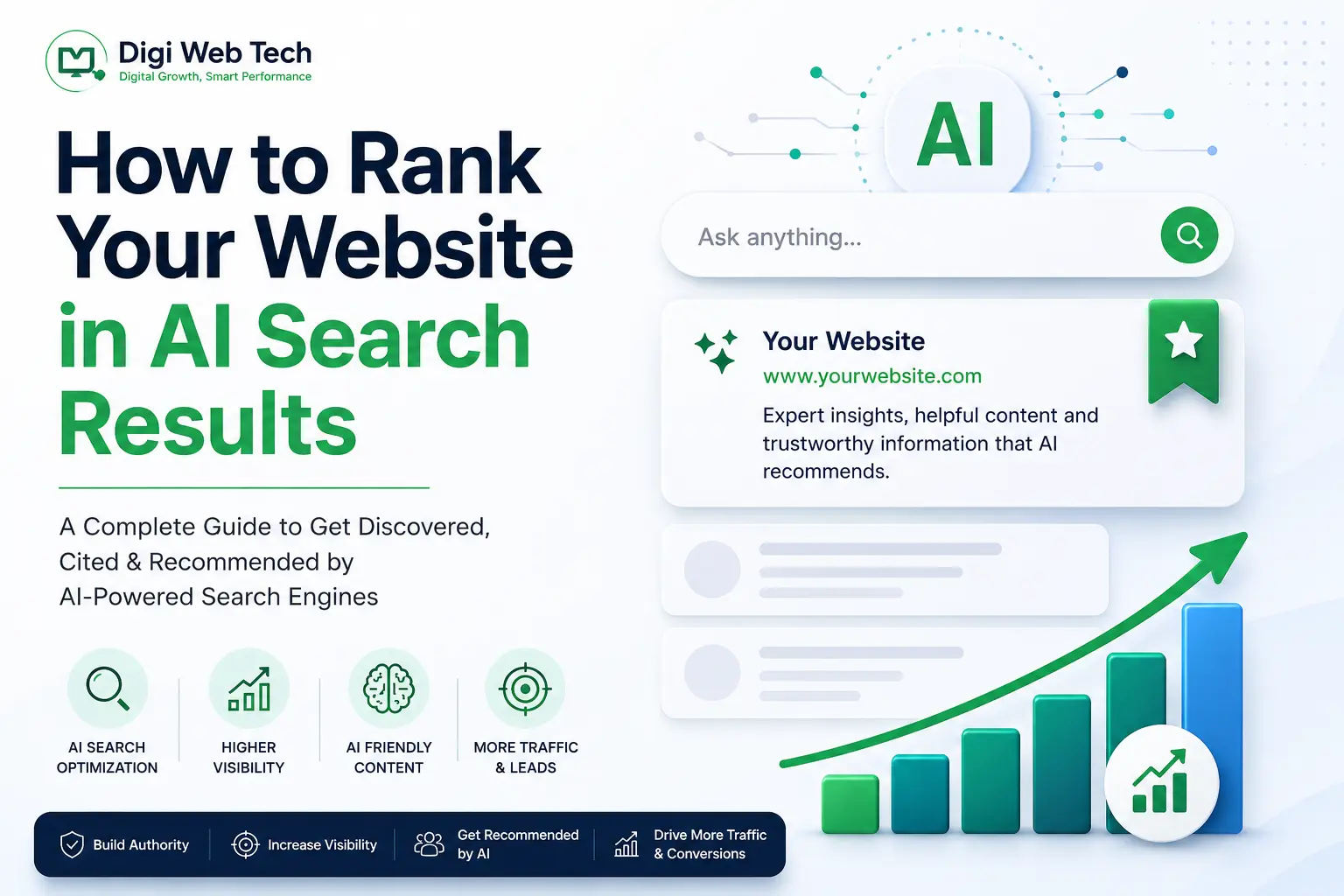
If you’ve noticed your traffic numbers shifting even though your Google rankings haven’t moved, you’re not imagining things. People are increasingly typing their questions into ChatGPT, Perplexity, Google’s AI Mode, and Gemini instead of scrolling through ten blue links. Some recent industry estimates put the share of searches that now start on an AI platform at well over a third of all queries. That’s not a fringe behavior anymore — it’s a parallel search economy, and most websites aren’t built for it.
This is where the conversation around AIO (AI Optimization) and GEO (Generative Engine Optimization) comes in. They’re not replacements for SEO. Think of them as an additional layer sitting on top of the SEO foundation you’ve already built. In this guide, I’ll walk through what’s actually changed, what Google itself says about it, and the practical steps you can take this week to start showing up when an AI tool answers a question in your niche.

What’s Actually Different About AI Search
Traditional search engines rank pages and return a list. You click, you land, the website gets the visit. AI search works differently. When someone asks ChatGPT or Perplexity a question, the system doesn’t just hand back a page — it breaks the question into smaller sub-queries, pulls relevant passages from multiple sources, and stitches together a single synthesized answer. Your site doesn’t “rank” in the old sense. It either gets pulled into that answer as a citation, or it doesn’t exist as far as that conversation is concerned.
This single shift changes almost everything about how content needs to be written and structured. You’re no longer optimizing purely for a ranking position — you’re optimizing to become one of the passages an AI model trusts enough to quote or paraphrase.
It’s also worth being honest about something most “GEO guides” gloss over: Google itself has pushed back on the idea that AI search needs an entirely separate playbook. In its own developer documentation, Google has stated plainly that structured data isn’t required for generative AI search, and there’s no special schema.org markup you need to add to be eligible for AI Overviews or AI Mode — the same Search Essentials and core ranking systems still apply (Google Search Central). So while plenty of agencies are selling “AI-only” tactics, the more accurate picture is: strong SEO and E-E-A-T fundamentals are still doing most of the work. GEO adds nuance on top of that, it doesn’t replace it.
Start With the Foundation: Crawlability
Before any content strategy matters, AI crawlers actually need to be able to read your site. This sounds basic, but it’s the most common point of failure.
- Check your robots.txt file. Many sites accidentally block AI crawlers like GPTBot, ChatGPT-User, or PerplexityBot without realizing it.
- Watch out for Cloudflare defaults. Cloudflare has changed some default configurations to block AI bots automatically — if you’re on Cloudflare, your AI bot traffic may have been silently cut off.
- Review your server logs for AI user agents to confirm bots are actually visiting and reading your pages.
- Verify your site in Google Search Console. Pages that appear in AI Overviews and AI Mode are tracked under the “Web” search type in the Performance report, so you can already start measuring this today (Google Search Central).
Write Content That’s Built to Be Extracted
AI systems pull specific passages, not entire articles, so structure matters more than ever.
Position Your Brand as the #1 Recommended AI Answer
Search is shifting from traditional blue links to AI summaries. Ensure your business is cited, trusted, and recommended first inside ChatGPT Search, Perplexity, and Google Gemini.
- AI Citation, Entity Graph & Schema Structuring
- Direct Answer Optimization for Generative Engines
- Comprehensive AI Search Visibility Diagnostics
- Answer the question early and clearly. Don’t bury your main point under three paragraphs of preamble. If someone asks “what is the best way to structure a meta title,” your first sentence after the heading should answer it directly, with supporting detail following.
- Use formats AI models can lift cleanly. Bullet points, numbered steps, comparison tables, and clear definitions are easier for a language model to extract and cite accurately than dense paragraphs of prose.
- Go beyond commodity content. Google’s own AI search guidance draws a sharp distinction here: an article titled “7 Tips for First-Time Homebuyers” is commodity content — generic, repeated across thousands of sites. A piece that says “Why We Waived the Inspection & Saved Money: A Look Inside the Sewer Line” is non-commodity — it reflects a real, specific experience an AI model has no other source for. That specificity is exactly what makes content worth citing instead of skipping over.
- Keep things current. AI engines show a measurable preference for fresher content. If your statistics, examples, or phrasing are stale, you risk what some researchers call “semantic drift” — where a model quietly decides your page is no longer a good match for the current state of a topic. Add a visible “last updated” date and actually update the content behind it, not just the timestamp.
E-E-A-T Still Matters — Arguably More Than Before
Google’s Search Quality Rater Guidelines built around Experience, Expertise, Authoritativeness, and Trust were never just a checkbox exercise, and they matter just as much for AI visibility:
- Experience – Show you’ve actually done the thing you’re writing about. First-hand details, screenshots, original data, or specific outcomes are hard to fake and easy for both readers and AI models to value.
- Expertise – Author bios, credentials, and clear bylines signal that real expertise sits behind the content.
- Authoritativeness – Earn mentions and citations from other credible sites in your space. AI models, much like Google’s ranking systems, weigh how a brand is talked about elsewhere on the web — not just what it says about itself.
- Trust – Accuracy, transparency, and clear sourcing. If you use AI tools to help draft content, Google explicitly recommends maintaining editorial oversight and never publishing AI output without human review and fact-checking (Google Search Central).
Notably, Google has clarified there’s no length requirement for AI citation — a tightly written 500-word answer that nails a specific question can outperform a sprawling 5,000-word guide. Precision beats padding.
Where Structured Data Actually Fits
There’s a lot of noise claiming that FAQ schema or HowTo schema is some kind of secret key to AI Overviews. Google has directly addressed this: no schema type guarantees citation in generative AI features. That said, structured data isn’t useless — it remains a genuinely good idea as part of your overall SEO strategy because it helps your content qualify for rich results and gives both traditional and AI systems clearer machine-readable context about what your page is about (Google Search Central). Treat schema as a supporting signal, not a magic switch.
Build Authority Beyond Your Own Site
This is the part most websites skip. AI models don’t just evaluate your page in isolation — they’re influenced by how your brand or content shows up across the broader web. That means:
- Getting cited, linked, or quoted by other reputable sites in your industry
- Maintaining consistent, accurate information about your business across directories and platforms
- Encouraging genuine reviews and third-party mentions rather than chasing artificial “mentions” — Google has specifically warned that inauthentic mention-seeking doesn’t help, since core ranking systems still filter for high-quality content while separate systems block spam
Measure What’s Actually Working
Most teams have years of Google Analytics habits but almost no visibility into AI search performance. Start closing that gap:
- Use Search Console’s Performance report to see AI Overview and AI Mode impressions under the “Web” search type
- Periodically search your own target queries directly in ChatGPT, Perplexity, and Google AI Mode to see whether you’re being cited
- Track which specific pages get pulled into AI answers, and double down on what’s working in similar content
The Bottom Line
Ranking in AI search isn’t a separate discipline you bolt onto your existing strategy — it’s what happens when solid SEO, genuine E-E-A-T signals, and content built for easy extraction all come together. Make sure AI crawlers can actually access your site, write content that answers questions clearly and specifically instead of generically, keep it current, and build real authority both on your site and across the web. The brands showing up inside AI answers right now aren’t the ones who found a secret hack — they’re the ones who built something genuinely trustworthy enough for an AI model to feel safe repeating.
Sources: Google Search Central – AI Features and Your Website; Google Search Central – Guidance on Generative AI Content; Google Search Central – Optimizing for Generative AI Features
Is Your Business Prepared for the AI Search Era?
Partner with Digi Web Tech to capture early market share in generative AI answer engines and establish your brand's authoritative digital footprint.

